

For many runners, cyclists, endurance athletes and fitness enthusiasts, Iliotibial Band Syndrome (ITBS) stands as a formidable challenge, often emerging as a significant barrier to training continuity and performance enhancement. Once pegged as a mere “friction” issue, contemporary research has peeled back layers of misconceptions to reveal a more complex aetiology.
Characterised by pain and tenderness on the outside of the knee, ITBS is more than just a nuisance; it’s a complex condition rooted in the repetitive stress and biomechanical inefficiencies inherent to long-distance and high-intensity sports. This blog delves into the anatomy of ITBS, explores its causes, and outlines effective strategies for rehabilitation and prevention.
Anatomy and Function of the IT Band
The IT band is not a standalone structure but a continuation of the fascia lata, which encases the thigh muscles. Originating at the pelvis and receiving contributions from the tensor fascia lata and the gluteus maximus, it merges into a robust insertion at the femur, patella, and tibia. This extensive tethering enables the IT band to offer stability and efficiency in our bipedal endeavours, cushioning the hip and knee during movement.
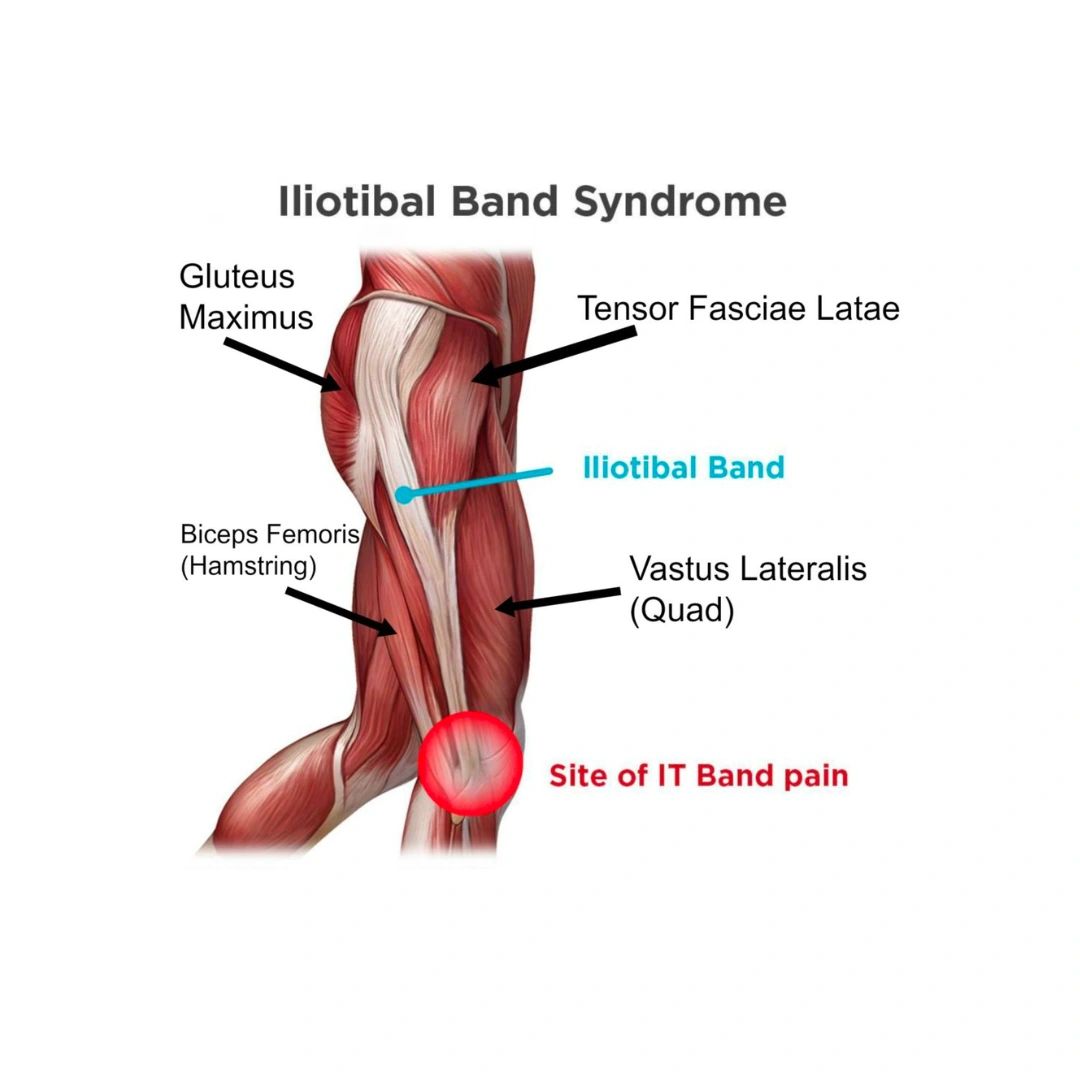
What is ITBS?
It stems from the compression of the underlying sensitive fat pad during 25-30 degrees of knee flexion, which is common during repetitive movements such as running, sprinting etc.
ITBS usually develops when an individual’s activity levels far exceed their capacity levels. Weak musculature and faulty biomechanics may also be the contributing factors leading to an increase in the stressors on the ITB.
Signs and Symptoms
With ITBS, you may experience:
- Dull aching pain on the outside of the knee
- Sharp or burning lateral knee pain during walking or running
- Swelling or tenderness along the iliotibial band
- Pain that worsens with activity, particularly downhill running, trail running
- Pain particularly with descending stairs
- A clicking sensation when the band rubs against the knee.
Unveiling the Causes
ITBS is typically an overuse injury, precipitated by a variety of factors that may include:
- Biomechanical Flaws: Poor running form, imbalances in muscle strength and flexibility, dynamic valgus, and issues with foot alignment can all contribute to abnormal stress on the ITB.
- Training Errors: Sudden increases in mileage, intensity, or insufficient recovery time can exacerbate the strain on the ITB.
- Surface and Equipment Mismanagement: Consistently running on banked surfaces, using worn-out shoes, or improperly adjusted bicycle settings can alter normal biomechanics, increasing the risk of ITBS.
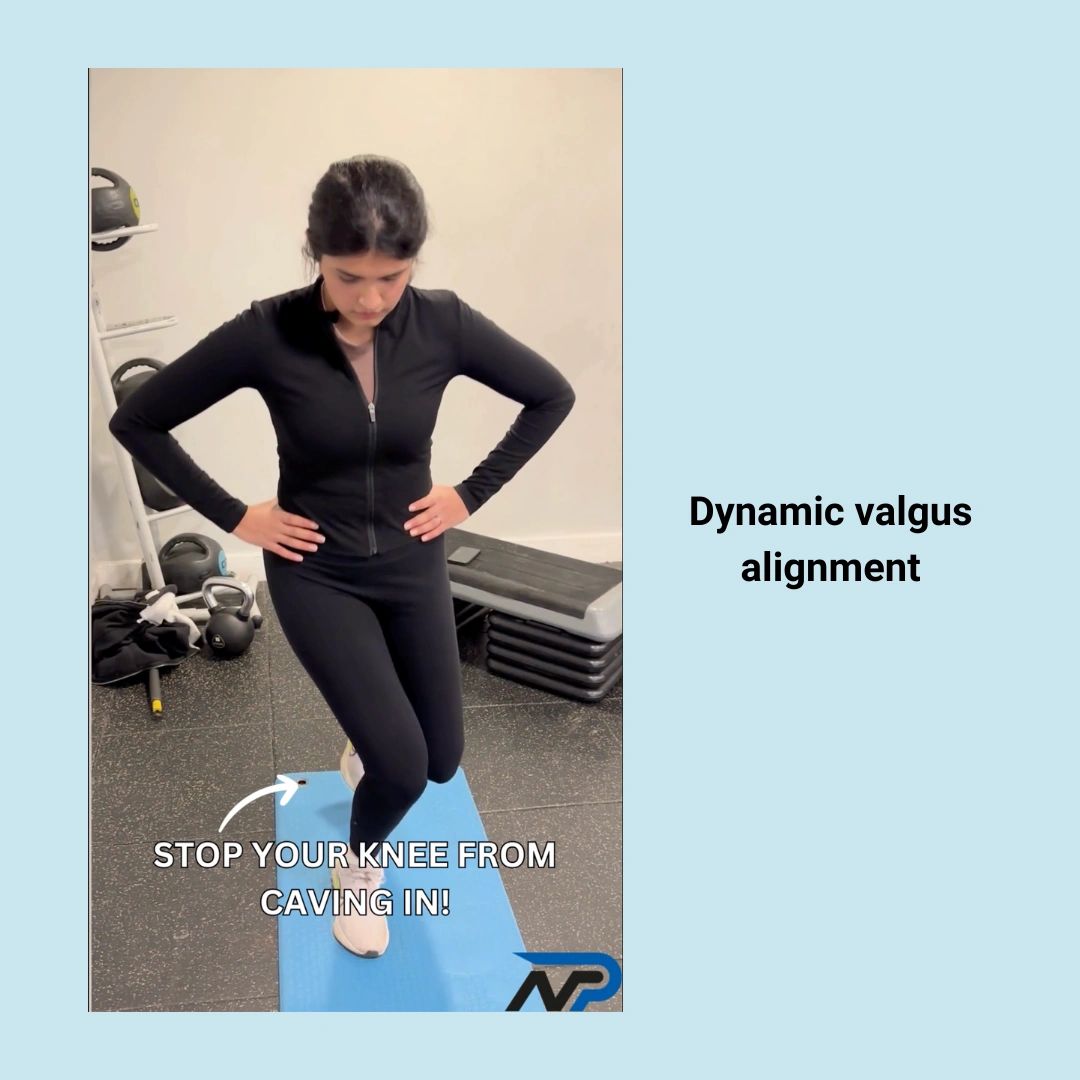
One of the biomechanical causes of ITBS can be a dynamic valgus alignment where you can see that the knee caves in, when in a single-leg stance position.
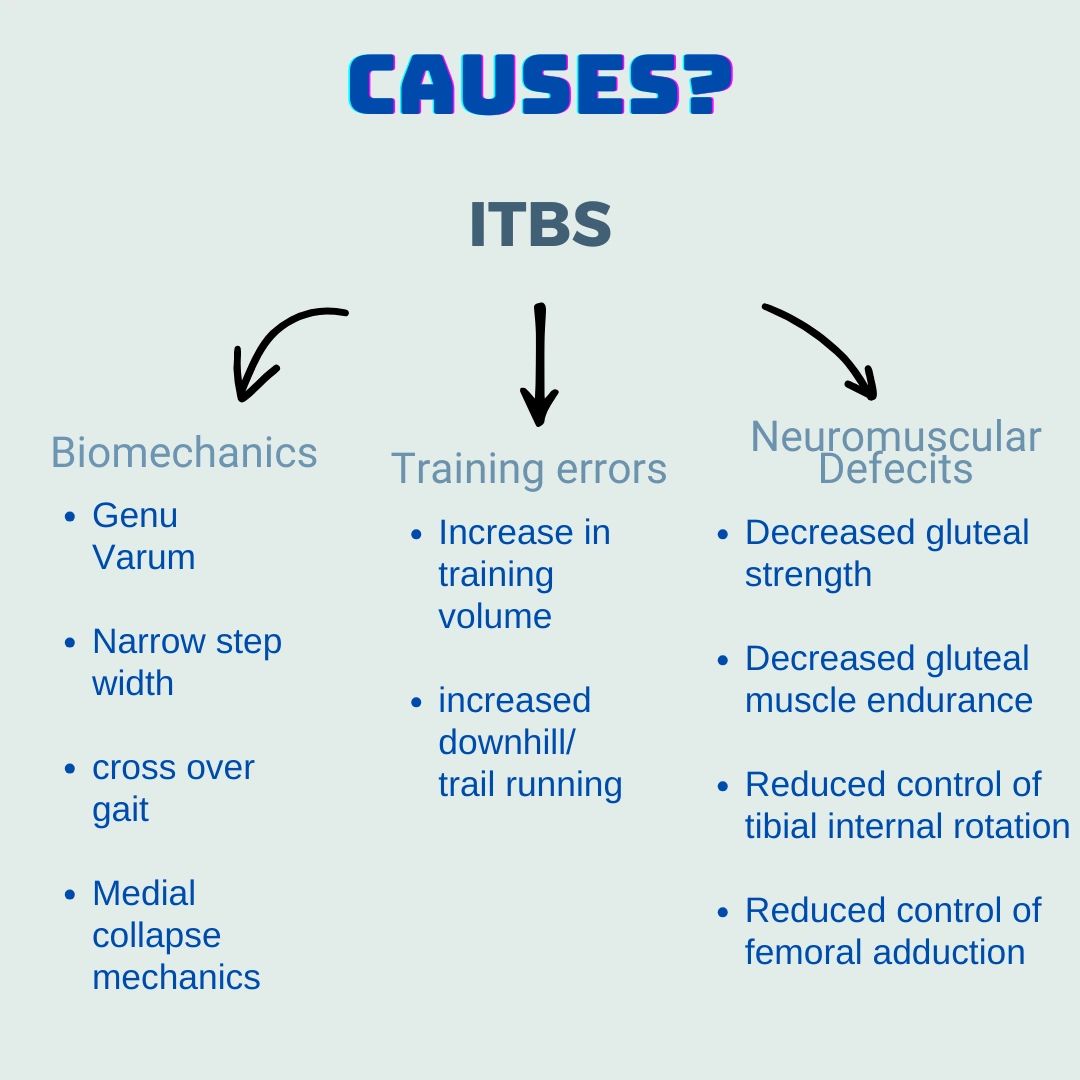
ITBS Rehabilitation
ITBS rehabilitation is divided into two main phases.
- Pain Dominant Phase
- Load Dominant Phase
Pain Dominent Phase
When facing IT band-related discomfort, the key is to recalibrate activity intensity, frequency, and volume to manageable levels. This doesn’t imply total rest but finding a balance that allows continued training without exacerbating pain.
Load Management: The Antidote within the Poison
Cross-training can supplement this period, ensuring fitness is maintained while the IT band recovers. For runners, this may mean initially avoiding downhill or trail runs and progressing cautiously to flat-ground running.
Running Retraining: A Supporting Role
While load management takes precedence, running retraining may benefit some individuals. Studies have linked IT band pain to greater hip adduction and knee internal rotation during running. Adjusting running mechanics—such as increasing cadence to widen step width and reduce hip adduction—might alleviate IT band strain.
Strength Training Exercises: Strengthening Beyond Symptoms
Resistance training does more than just address weaknesses; it prepares the body for the demands of running and enhances load tolerance. While some studies suggest a link between IT band pain and hip or knee weakness, the primary goal of these exercises is to build resilience.
Since the goal is to calm stuff down and avoid flare-ups, well-tolerated loads should be provided during this stage.
The strength program should include the following exercises:
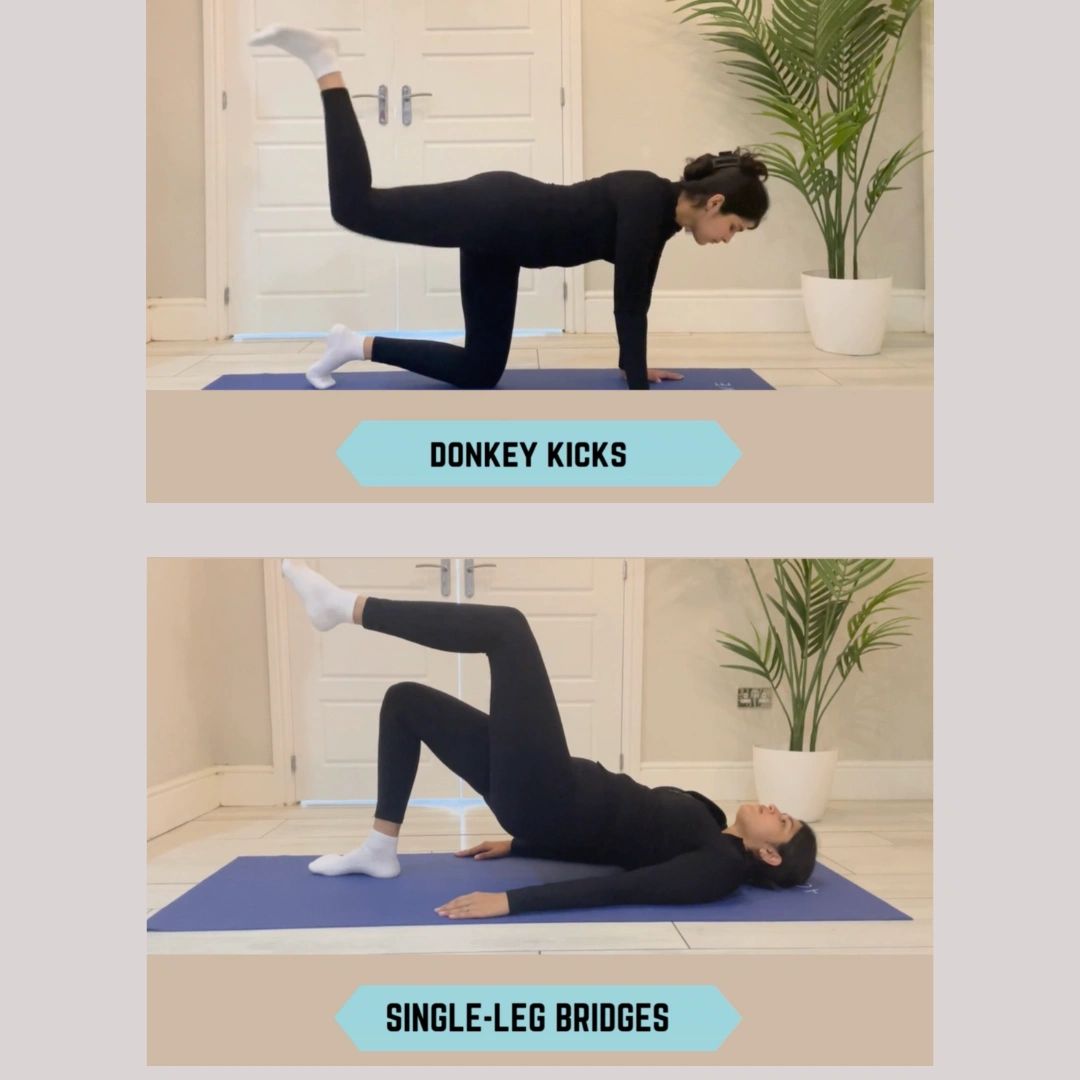
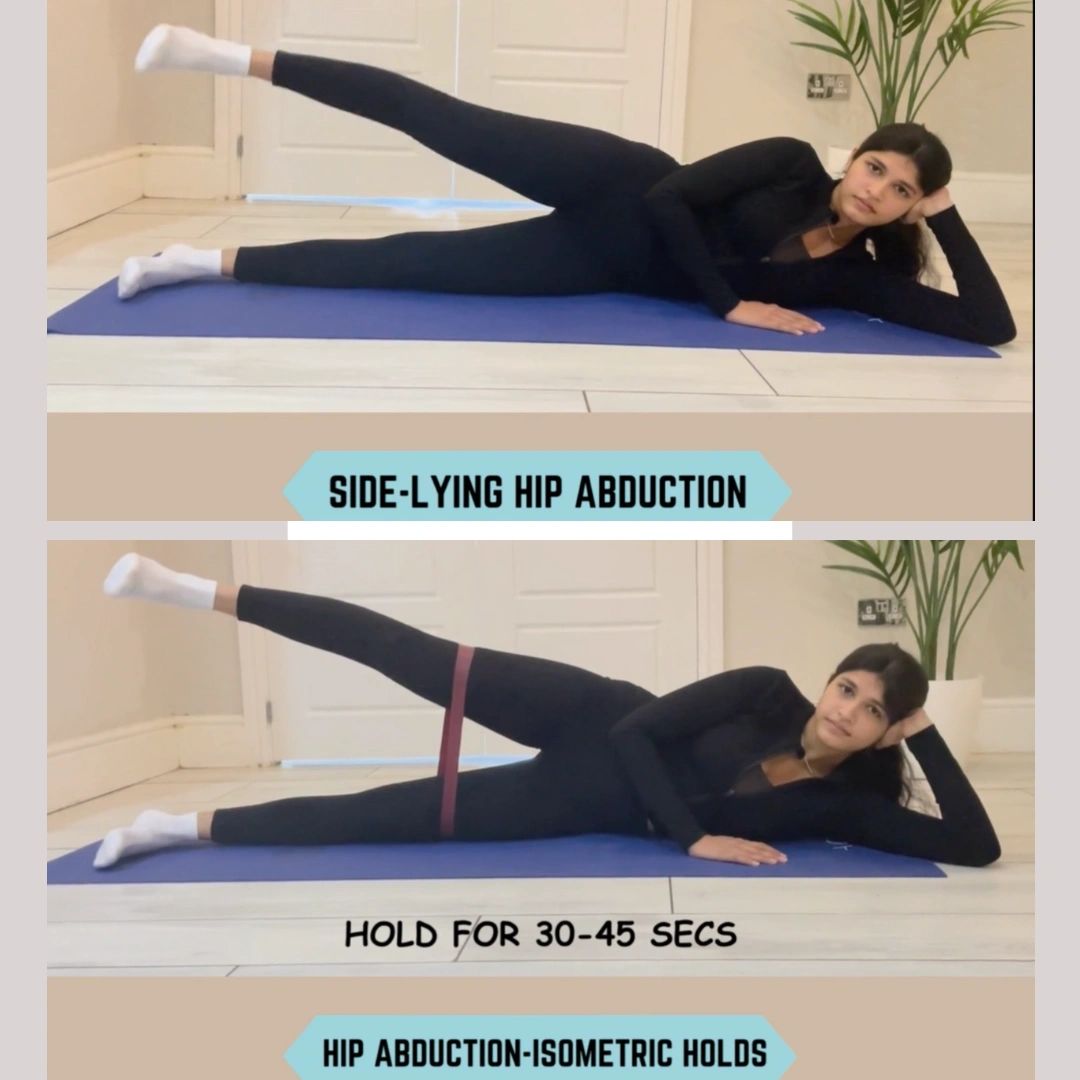
Load Dominant Phase
Exercise progressions should be tailored and gradually intensified over months, focusing on the quadriceps, hamstrings, glutes, and calves. The pain during these exercises should remain tolerable, ideally below a 2/10 threshold.
Heavy Slow Resistance Training (HSR):
This approach not only aids in the rehabilitation process but also lays the foundation for a successful return to running by improving the load tolerance of the affected tissues. HSR training for ITBS typically starts with exercises that focus on the hip abductors, glutes, and quadriceps.
The strength training program includes:
- Forward Lunges
- Split Squats
- Step Ups
- Squats
- Ipsilateral Hip Hikes

The progression of HSR training is carefully managed, based on individual tolerance. Initially, exercises are performed with weights that are challenging yet do not exacerbate ITBS symptoms. Over time, as pain decreases and strength improves, the resistance is gradually increased. The progression follows a well-structured plan, often moving from double-leg to single-leg exercises to mimic the unilateral load during running.
Employ exercises that improve the load tolerance of the knee in positions that are usually most aggravating for individuals with IT band-related pain.
Plyometric Training
This is an essential part of the rehab before returning to running. The introduction of plyometrics should be gradual, starting once the athlete has demonstrated sufficient strength and load tolerance without exacerbating ITBS symptoms. Initial exercises might include low-impact plyometrics such as:
- Squat jumps
- Box step-ups and step-downs
- Skipping drills
As tolerance and strength improve, the intensity and complexity of plyometric exercises can be increased. This progression might involve higher boxes for jumps, incorporating lateral movements to enhance agility and mimic running dynamics, and introducing bounding and single-leg hops to closely replicate the unilateral impact of running.
Gradual Return to Running
Return to running should be started first with level running on a treadmill.initially, short, low-intensity runs are introduced, allowing for adequate recovery between sessions. Running volume and intensity are gradually increased, monitoring for any signs of ITBS flare-up.
A Holistic Approach to IT Band Rehab
In summary, IT band-related pain is not solely due to tightness demanding aggressive rolling or stretching. It’s a multifactorial condition where load management is paramount. Augmenting this with cadence adjustments and resistance training can pave the way for a robust recovery.
At Nottingham Physio Clinic, we specialise in a holistic and personalised approach to IT band syndrome recovery. Should you need personalised guidance or further assistance with your rehabilitation journey, feel free to visit us at Nottingham Physio.
Visit us to experience a rehabilitation journey that is as unique as your needs and let us help you expand your envelope of function for long-term well-being.
Discover more from Nottingham Physio
Subscribe to get the latest posts sent to your email.
You must be logged in to post a comment.